
The Unexpected Cost of Charging: How Local Grid Prices Turn an EV from a Deal into a Drain
— 5 min read
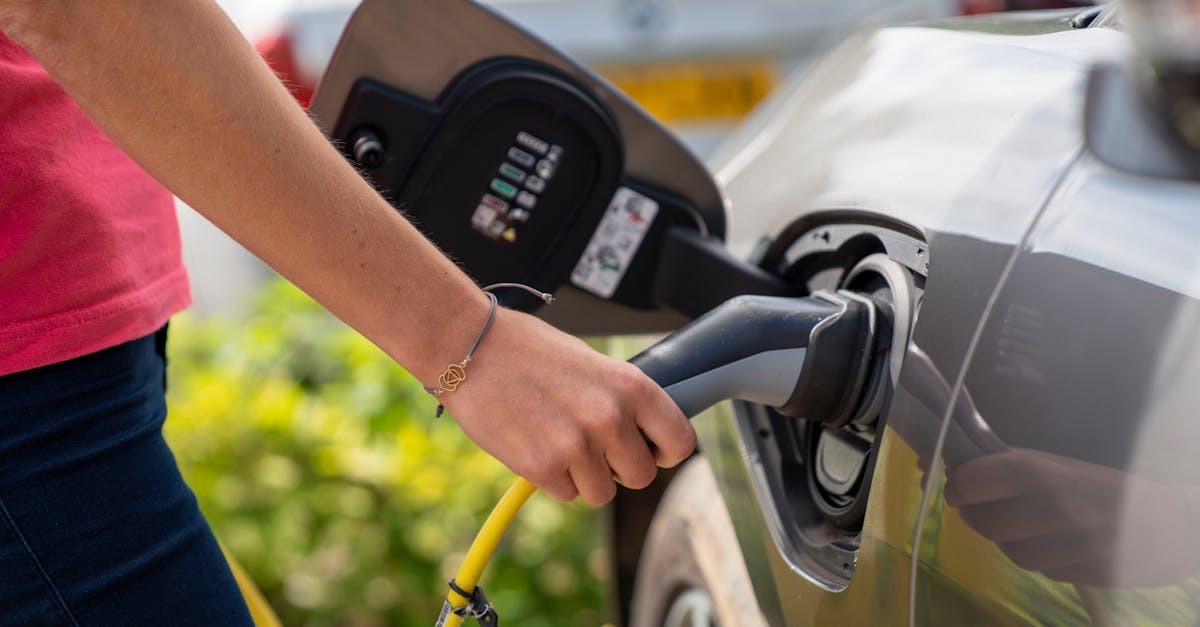
Why location decides the bottom line for electric vehicles
When a driver in Oslo plugs in a electric car and pays 0.12 USD per kilowatt-hour, the same model in Texas can cost more than double per charge. A recent study from Consumer Reports showed that the average EV charging cost varied by 78 percent across major markets. That gap alone can swing the five-year total cost of ownership (TCO) by thousands of dollars.
The economic story of electric vehicles is no longer about battery capacity or range; it is about the price of the electricity that powers them. In regions where the grid is cheap and renewable, the promised savings materialize. In markets where tariffs are high or where time-of-use pricing penalises evening charging, the advantage evaporates. This article unpacks the regional market variations that shape the true economics of EVs, from EV battery depreciation to the resale premium of a Tesla in a high-adoption city.
Electricity tariffs: the hidden variable in EV charging economics
Most buyers assume a flat rate of 0.13 USD per kWh, the average quoted by national utilities. The reality is a patchwork of rates that reflect local policy, generation mix and demand-side management. In California, residential electricity averages 0.22 USD/kWh, while in Quebec it drops to 0.06 USD/kWh thanks to abundant hydro power. The difference translates directly into the cost per mile.
Consider a midsize EV car that consumes 30 kWh per 100 miles. At 0.22 USD/kWh, the cost per mile is 6.6 cents; at 0.06 USD/kWh it falls to 1.8 cents. Over a typical 15,000-mile annual drive, the annual charging bill swings from 990 USD in California to 270 USD in Quebec. The table below summarises the impact for four representative regions.
| Region | Average kWh price (USD) | Annual charging cost (USD) | Five-year charging cost (USD) |
|---|---|---|---|
| California | 0.22 | 990 | 4,950 |
| Texas | 0.13 | 585 | 2,925 |
| Norway | 0.18 | 810 | 4,050 |
| India (urban) | 0.09 | 405 | 2,025 |
When you add the cost of a home charger - typically 500 USD for equipment plus installation - the regional disparity widens further. In jurisdictions that subsidise Level 2 installations, the net outlay can drop by up to 40 percent, reshaping the break-even point for an EV battery replacement.
Grid mix, climate, and EV battery longevity
The source of electricity influences more than the price tag; it affects how fast a battery degrades. Batteries charged with high-frequency renewable energy tend to experience lower thermal stress, extending useful life. Conversely, regions that rely heavily on coal often see higher ambient temperatures at substations, which can accelerate degradation.
Research from the International Energy Agency indicates that a battery cycled in a hot climate loses roughly 0.5 percent of capacity per year more than the same battery in a temperate zone. In the Gulf Coast, where summer temperatures exceed 35 °C, a ten-year-old EV battery may retain only 80 percent of its original capacity, compared with 88 percent in the Pacific Northwest.
That capacity loss translates into higher electricity consumption per mile, eroding the cost advantage. A driver in Phoenix who sees a 12 percent range reduction will need to charge more often, adding roughly 150 USD per year to the operating cost, assuming the same electricity price.
Consumer Reports found that real-world range averaged 12 percent less than EPA ratings, highlighting the importance of regional factors in battery performance.
These findings suggest that the economic calculus for an electric vehicle must incorporate local climate data alongside tariff structures. Ignoring either factor can lead to a mis-priced investment.
Incentive ecosystems and regional market penetration
Governments use a mix of purchase rebates, tax credits, and non-monetary perks to accelerate adoption. The effectiveness of these tools varies dramatically across markets. In Norway, a combination of zero-VAT, free tolls and access to bus lanes reduces the effective purchase price of a Tesla by more than 30 percent. In contrast, many U.S. states offer a flat $2,500 rebate that covers only a fraction of the price gap.
When you translate incentives into a per-kilometre cost reduction, the picture becomes clearer. A $7,500 federal tax credit spread over an expected 150,000-mile lifespan saves 5 cents per mile. In a market where electricity costs 6.6 cents per mile, the incentive offsets nearly 80 percent of the charging expense. In regions with cheap electricity, the same credit represents a smaller proportion of the total cost, making it less decisive.
Local policies also affect the availability of fast-charging networks. Some European cities subsidise public DC fast chargers, reducing the per-kilometre cost of long-distance travel. In regions without such support, drivers rely on slower home charging, which can increase time-related opportunity costs, especially for commercial fleets.
Key takeaway: Incentives that target both purchase price and charging infrastructure generate the greatest ROI in high-tariff markets.
Resale dynamics and regional demand elasticity
The second-hand market for electric vehicles reflects regional demand and perceived battery health. In markets where the EV battery warranty is widely honoured and service centers are plentiful, used EVs command a premium of up to 15 percent over comparable gasoline cars. In contrast, regions with limited service networks see a depreciation penalty of 20 percent or more.
Take the example of a three-year-old Tesla Model 3 in Berlin versus Dallas. In Berlin, the average resale price is 42,000 EUR, roughly 12 percent above the local gasoline equivalent. In Dallas, the same model sells for 38,000 USD, about 8 percent below the price of a comparable internal combustion vehicle. The divergence stems from consumer confidence in the local charging grid and the perceived longevity of the EV battery.
These resale differentials feed back into the TCO calculation. A higher resale value shortens the payback period for the initial price premium, while a lower resale value lengthens it. For buyers in high-value markets, the break-even horizon can shrink to three years; in low-value markets, it may extend beyond seven.
Strategic implications for buyers and policymakers
Understanding regional market variations is essential for anyone weighing an electric vehicle purchase. The economic equation starts with electricity tariffs, but it quickly expands to include grid mix, climate-induced battery wear, incentive structures, and resale dynamics. Ignoring any of these variables can turn a seemingly profitable investment into a financial drain.
For consumers, the practical steps are clear: map local electricity rates, assess time-of-use pricing, verify the availability of fast-charging subsidies, and research used-car depreciation trends. For policymakers, the data suggests that uniform incentives are insufficient. Targeted subsidies that lower electricity costs in high-tariff regions, coupled with investments in climate-resilient charging infrastructure, can equalise the economic playing field.
When the variables align - low electricity prices, supportive incentives, a favourable climate, and a robust resale market - the EV proposition becomes a clear financial win. When they do not, the same vehicle can become a cost centre. The hidden economics of regional variation remind us that the future of mobility is not one-size-fits-all, but a mosaic of local realities.
What I would do differently: before signing any purchase agreement, I would run a regional TCO spreadsheet that incorporates local kWh rates, projected battery degradation, and resale forecasts. That disciplined approach turns a hopeful assumption into a data-driven decision.