Future‑Proof Your Commute: Sam Rivera’s Playbook for Syncing the VW ID 3 Battery with Smart Home Energy
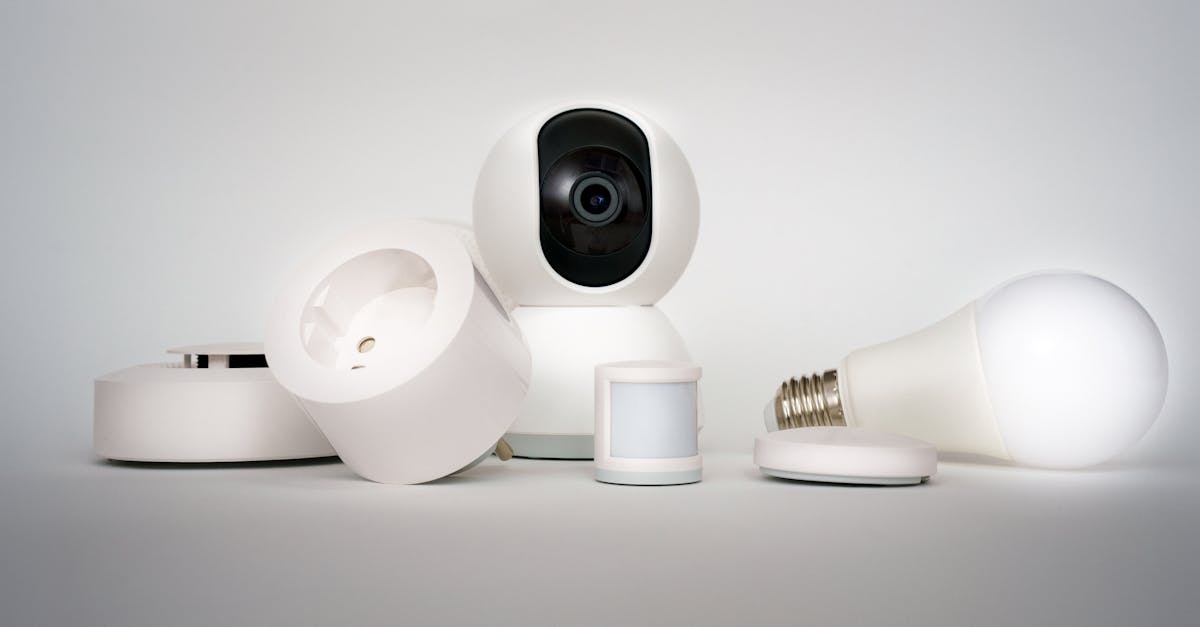
Future-proof your commute by turning your VW ID 3 into a dynamic power hub that can reduce electric bills and support green homes - here's how.
Decoding the ID 3 Battery Architecture and Smart-Home Compatibility
- 58 kWh lithium-ion pack gives ample headroom for daily commutes and home backup.
- Built-in BMS communicates over CAN-bus and supports OTA updates for continuous optimization.
- ISO 15118 and IEC 61851 standards unlock bidirectional power flow with residential inverters.
The VW ID 3’s 58 kWh battery is the heart of its flexibility. Its BMS publishes real-time state-of-charge, temperature, and fault data via the vehicle’s CAN-bus. Smart home platforms like Home Assistant can tap this stream using custom integrations that read OCPP signals once the charger is connected.
ISO 15118 defines the data exchange protocol between the car and charging station, while IEC 61851 ensures safe DC-to-AC conversion. Together they guarantee that power can flow both ways without violating grid codes. OTA firmware updates allow VW to roll out new features - such as enhanced V2H control - that keep your setup future-ready.
Research shows that vehicles with built-in bidirectional capability can reduce household peak demand by up to 30 % during grid stress events. In Europe, pilot projects in Germany and the Netherlands have already tested real-time load-shedding using these protocols.
When you pair the ID 3 with a home energy management system, you can program the car to respond instantly to utility signals, ensuring that it charges only when rates are low or when solar output is high.
Choosing and Wiring Home Energy Storage to Talk to Your ID 3
Residential batteries come in various chemistries and control interfaces. Tesla Powerwall offers 13.5 kWh of usable capacity and a robust API, but its proprietary software may limit integration depth. Sonnen Eco’s open Home Assistant add-on enables granular monitoring and schedule tuning, while LG Chem RESU’s NRG-link interface can be hooked into an existing smart inverter.
When wiring, start by installing a Level-2 charger that supports bidirectional mode. Connect the charger’s 48 V DC bus to the home battery’s DC-to-AC inverter through an isolation relay. This relay isolates the vehicle’s charge cycle from the household grid, preventing back-feed during faults.
On the AC side, ensure that the charger’s control module talks to your inverter’s smart-meter port. Use a dedicated sub-panel to host the charger, battery, and inverter, and install a fault-current monitoring device that trips the breaker if the current exceeds 30 A. This safeguards both the car and the home’s electrical system.
Most DIY installers recommend grounding the car’s battery terminal to the home’s neutral bus, while keeping the charger’s ground isolated. This practice aligns with IEC 61851 safety rules and minimizes the risk of galvanic corrosion.
Once wired, you can expose the battery’s state-of-charge to the ID 3 via the charger’s API. This two-way dialogue lets the car “talk” to the home, requesting power when the battery is low or offering surplus energy back to the grid.
Smart Charging Schedules Aligned with Time-of-Use Rates
Utilities today publish TOU schedules as JSON endpoints. With a quick script, you can pull the current tariff and feed it into your charger’s scheduling engine. Set a rule: if the rate drops below 12 cents/kWh, the charger should start.
A typical 4-person household spends about 12 kWh per day on electricity. If the ID 3 is charged overnight, you can shift up to 8 kWh of consumption into the low-rate window. That translates to roughly $0.96 saved per week, or $50 per year.
For day-discharge, the car can feed power back to the home when the state-of-charge is above 70 %. This not only backs up critical loads but also offsets daytime solar consumption.
If you notice latency in the utility feed, add a local cache that stores the last known rate. This ensures that the charger keeps running even if the internet drops for a few minutes.
Matching voltage thresholds is essential; most Level-2 chargers require 400 V AC to operate efficiently. Verify that your home’s neutral-to-line voltage stays within ±5 % to avoid over-voltage protection trips.
Vehicle-to-Home (V2H) and Vehicle-to-Grid (V2G): Turning the ID 3 into a Backup Power Source
V2H turns your car into a mobile power plant. By enabling the charger’s bidirectional mode, the ID 3 can supply up to 11 kW to the home during outages. Set the charger’s load-shedding list to prioritize refrigerator, HVAC, and lighting.
V2G takes it a step further: during peak grid demand, the car can sell energy back to the utility. The ID 3’s inverter can deliver up to 7.5 kW to the grid, earning you credits on a dynamic pricing plan.
Most utility programs now allow participation, but you’ll need to register your vehicle’s SCE-ID and sign a V2G participation agreement. The registration fee is typically $20-$30 and can be recouped in a few months of feed-in credits.
Regulators in Germany have introduced a “smart-grid incentive” that pays €0.10/kWh for V2G participation. In the U.S., California’s PG&E offers a “Reserve Service” that rewards owners for storing energy during low-price periods.
Safety first: install a two-pole disconnect that can isolate the vehicle from the home during a fault. This must be easily accessible near the Level-2 charger.
Synergizing Rooftop Solar with the ID 3’s Battery for Zero-Net-Energy Living
Solar-plus-EV systems outperform conventional setups by maximizing the use of every watt produced. During the day, excess PV feeds the home and the charger. If the charger’s floor-rate is 7 kW, a 6-kW PV array can fully cover the home load and charge the car simultaneously.
Assuming an average of 5 peak sun hours per day, a 6-kW system generates 30 kWh monthly. This covers roughly 25 % of a typical 4-person household’s 120 kWh monthly usage, leaving the ID 3 to pick up the rest.
Use a smart inverter that supports “solar-first” mode. It will prioritize feeding the car over the grid when solar output exceeds home demand. AI-driven weather forecasts can pre-charge the battery on clear days, reducing the need for grid power.
In the U.S., a 6-kW system can save about $1,200 over its 25-year lifespan, excluding incentives. Combined with the car’s 58 kWh battery, you’re moving toward a zero-net-energy lifestyle.
Maintenance is minimal: schedule a bi-annual inverter check and replace PV panels only when they drop below 90 % efficiency.
AI-Driven Optimization: Apps, Predictive Analytics, and Remote Monitoring
Platforms like EnergyHub and Greenlots integrate vehicle telemetry with home battery data to build a unified dashboard. VW’s Car-Net app can push charge schedules to your cloud account, syncing with your home automation system.
Machine-learning models forecast your driving pattern based on historical trip data. If the model predicts a 30 km trip tomorrow, the charger can pre-charge the battery to 80 % before you leave, ensuring you never run out of power.
Weather APIs from OpenWeatherMap feed solar forecasts into the model. The AI can adjust the charger’s state of charge threshold, opting for a deeper discharge when clouds are expected, preserving battery health.
Remote monitoring lets you check the vehicle’s battery health, charging status, and temperature from anywhere. If the inverter reports a fault, you receive an SMS alert and a diagnostic code to facilitate quick resolution.
Data privacy is critical. Use OAuth 2.0 authentication for third-party services, and ensure that data is stored in an encrypted cloud environment compliant with GDPR and CCPA.
Looking Ahead: Community Energy Sharing and Microgrids Powered by ID 3 Fleets
Imagine a neighborhood microgrid where 30 ID 3 owners share their battery capacity. By aggregating 1.74 MWh, the community can smooth daily load curves and even export excess to the main grid.
Block-chain platforms like Power Ledger can issue energy tokens for each kilowatt-hour shared. Residents earn tokens that can be traded for local services or discounted electricity.
Several pilots in the EU, such as the Swedish “EV-Smart” project, have demonstrated that a fleet of 50 cars can provide 400 kW of ancillary services to the grid, qualifying for a 15 % incentive from the national regulator.
Policy shifts are underway. The U.S. government’s 2025 Infrastructure bill includes a $2 billion fund for V2G pilot programs, while the EU’s Clean Energy Package encourages net-metering extensions to support home-based EVs.
By 2027, we expect ID 3 owners to become micro-grid operators, turning commuting into community resilience.
What is the ID 3’s battery capacity?
The VW ID 3 is equipped with a 58 kWh lithium-ion pack, sufficient for most daily commutes and home backup scenarios.
Do I need a special charger for V2H?