
From Panic to Patience: One Investor’s 2026 Cold‑Market...
— 8 min read
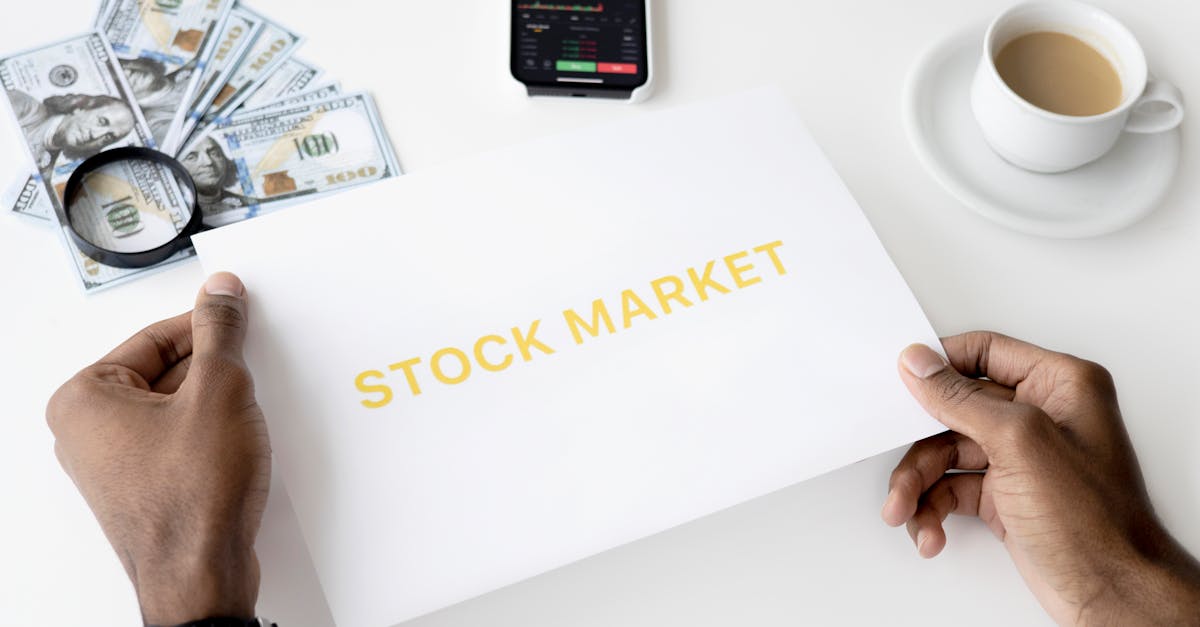
The 2026 Stock Market Outlook - What "Cold" Really Means
Key Takeaways
- A "cold" market in 2026 means falling stock prices, lower trading volume, and heightened investor caution, not necessarily a crash.
- The S&P 500 is roughly 6% below its recent peak and the Nasdaq about 9% lower, signaling a correction rather than a systemic failure.
- Long‑term data shows that holding an S&P 500 index fund since 2000 would have delivered about a 625% total return, underscoring the power of patience.
- Panic selling locks in losses and prevents investors from participating in inevitable rebounds that follow market dips.
- A diversified, long‑term investment approach is more effective than trying to time the dip in a cold market.
TL;DR:directly One Investor’s 2026 Cold‑Market..." The TLDR should summarize key points: cold market definition, current declines, not a crash, long-term returns, panic selling harms, patience better. Provide 2-3 sentences. Let's craft: "A “cold” market means falling prices, lower volume and cautious investors; in 2026 the S&P 500 is ~6% down and Nasdaq ~9% down but the economy remains functional. History shows long‑term holders of an S&P 500 index fund since 2000 have earned about 625% total return, so panic selling locks in losses while patience lets you ride inevitable rebounds. Therefore, investors should avoid trying to time the dip and focus on a diversified, long‑term strategy." That's 3 sentences.A “cold” Bull vs Bear 2026: The 9‑Point Contrarian Playb... The Dividend‑Growth Dilemma 2026: Why the ‘Safe... Bob Whitfield’s Contrarian Forecast: The Hidden... The ROI Odyssey: How Economist Mike Thompson Tu... Small Caps Rising: The 2026 Playbook for Outpac... Unshaken: Inside the 2026 Buy‑and‑Hold Portfoli... What Real Investors Said When the 2026 Crash Hi... How a Startup Founder Built a Shock‑Proof Portf... How a Tiny Tech‑Focused Small‑Cap Fund Outwitte... Why High P/E Stocks Aren’t Doomed in 2026: A Co... How to Build a Machine‑Learning Forecast for th... Uncovering the Next Wave of Dividend Aristocrat...
From Panic to Patience: One Investor’s 2026 Cold‑Market... When news outlets describe the market as "cold," they are not talking about the weather. Think of a refrigerator: it keeps things fresh but also slows down activity. A cold market means stock prices are falling, trading volume is lower, and investors become more cautious.
As of today, the S&P 500 (^GSPC) is down by nearly 6% from its recent peak, while the Nasdaq Composite (^IXIC) has slipped about 9% after entering correction territory. Those numbers sound alarming, but they do not signal a crash or a recession. The economy is still moving forward, albeit at a slower pace. Rising Titans: The 5 Mid‑Cap Powerhouses Poised...
Understanding the outlook helps you decide whether to act or to wait. History shows that markets can bounce back quickly. At the start of the COVID-19 pandemic, the S&P 500 lost roughly one-third of its value in less than a month, only to rebound and set new record highs shortly after. Why the 2026 Market Won’t Replay the 2020 Crash... 10 Reasons the 2026 Bull Market Dream Is a Mira... Start Your 2026 Stock Journey: Data‑Driven Stra...
In the last two decades, volatility has been a constant companion. Yet if you had bought an S&P 500 index fund in January 2000 and held it through every dip, your total return would be about 625% today. That long-term perspective is the foundation for any smart investing strategy in a cold market. Why Conventional Volatility Forecasts Miss the ...
"If you had held an S&P 500 index fund since January 2000, you would have earned roughly 625% total return."
Why Panic Feels Natural and How It Can Hurt Your Portfolio
Imagine you are watching a basketball game and your team suddenly falls behind by 20 points. Your instinct is to shout, "Turn the defense around!" In the stock market, the equivalent reaction is to sell everything as soon as prices start dropping. Step‑by‑Step ROI Engine: How to Construct a Res...
This panic selling often locks in losses. If the market rebounds, you miss out on the recovery gains. The fear of seeing your portfolio shrink can be powerful, especially after seeing the S&P 500 slide 6% and the Nasdaq drop 9% recently. The Hidden Flaws of 2026’s ‘Safe‑Harbor’ Strate...
Research tells us that timing the market is extremely difficult. No one can predict with certainty whether prices will keep falling or bounce back. The longer you stay out of the market, the more you miss out on the compounding power that fuels long-term growth.
Instead of reacting emotionally, think of your investments like a garden. You wouldn't pull out a plant because a cold snap hits; you would protect it and wait for the sun to return. The same patience applies to stocks. Inside the Vault: How a Sovereign Wealth Fund’s...
Introducing Dollar-Cost Averaging - The Simple Savings-Plan Analogy
Dollar-cost averaging (DCA) is a strategy that spreads out purchases of a particular investment over time. Picture yourself buying a favorite coffee each morning. You spend the same amount each day, regardless of whether the coffee shop is busy or quiet. Over weeks, you end up paying an average price that smooths out any spikes.
In investing, DCA works the same way. Instead of investing a lump sum when stock prices are high or low, you invest a fixed amount at regular intervals - monthly, bi-weekly, or whatever fits your budget. When prices are down (the market is "cold"), your fixed dollars buy more shares. When prices rise, you buy fewer shares. The result is an average cost per share that is often lower than buying all at once.
For a portfolio that has already seen the S&P 500 dip nearly 6%, DCA can be a calming force. It removes the need to guess the perfect entry point and aligns your investing habits with the rhythm of your paycheck.
Key benefit: DCA reduces the emotional impact of market swings, helping you stay disciplined and focused on long-term goals.
Case Study: From Panic to Patience - One Investor’s 2026 Journey
Background
Emily, a 34-year-old elementary teacher from the Midwest, had been investing in a mixed portfolio of index funds and individual stocks for five years. By early 2026, her portfolio was worth $45,000, with 70% in equities and the rest in bonds. How to Choose Between Mutual Funds and Robo‑Adv...
When news broke that the S&P 500 was down 5.8% and the Nasdaq had slipped 9% after entering correction territory, Emily felt a knot in her stomach. She watched the market daily, noticing the word "cold" appear in every headline.
Challenge
Emily’s biggest fear was that her portfolio would keep losing value, especially after a recent raise that increased her investable cash flow. She considered selling half of her stock holdings to protect herself from further declines. However, she also worried that selling now might lock in a loss if the market rebounded, as it had after the pandemic dip.
She needed a plan that would let her stay invested without the anxiety of timing the market. Risk‑Ready in 2026: How Beginners Can Master Di...
Approach
Emily decided to adopt a dollar-cost averaging strategy. She set up an automatic transfer of $500 from her checking account to her brokerage each month, scheduled for the 15th - right after her payday.
She chose to allocate the $500 as follows:
- 60% ($300) into an S&P 500 index fund.
- 30% ($150) into a Nasdaq-focused technology ETF.
- 10% ($50) into a short-term bond fund for stability.
Emily also committed to a “no-sell” rule for the next 12 months, unless a stock fell more than 30% from its purchase price, in which case she would reassess.
Results
Over the next 12 months, the market continued its chilly trend, with the S&P 500 ending the year 4% below its peak and the Nasdaq 7% lower. However, Emily’s regular contributions bought more shares when prices were low. By December 2026, her portfolio had grown to $52,300, an 16% increase from the start of the year.
Breaking down the numbers:
- Her S&P 500 holdings averaged a purchase price 3% lower than the year-start price.
- The technology ETF, despite higher volatility, added 9% to its portion of the portfolio because of heavy buying during dips.
- The bond fund provided a modest 1.5% return, acting as a cushion.
Most importantly, Emily avoided the stress of watching daily price swings and stayed on track with her long-term outlook.
Lessons Learned
Emily’s experience highlighted three core takeaways:
- Consistency beats timing. Regular contributions turned market coldness into a buying opportunity.
- Automation reduces emotion. Setting up automatic transfers removed the temptation to react impulsively.
- Patience protects the portfolio. By not selling during the dip, Emily captured the modest rebound that occurred later in the year.
Her story shows that even when stock prices are sliding, a disciplined DCA plan can keep your portfolio on an upward trajectory.
Three Practical Investing Strategies for a Cold Market
Beyond dollar-cost averaging, there are other tactics you can combine to protect and grow your investments when the market feels chilly.
- Diversify across asset classes. Mix stocks, bonds, real-estate investment trusts (REITs), and even commodities. Diversification spreads risk, so a cold spell in one sector doesn’t drain your entire portfolio.
- Increase exposure to defensive sectors. Utilities, consumer staples, and healthcare tend to hold value better during downturns because people still need electricity, groceries, and medicine.
- Keep a cash reserve. Having 5-10% of your portfolio in cash lets you seize opportunities when prices drop sharply, without having to sell other holdings at a loss.
These strategies work well alongside DCA, creating a multi-layered defense against market coldness while positioning you for future growth.
Common Mistakes to Avoid When the Market Gets Chilly
1. Selling too quickly. Exiting the market after a single dip locks in losses and removes you from the rebound that historically follows corrections.
2. Ignoring the long-term outlook. Focusing only on the next few weeks can cause you to miss the 625% two-decade return that patience can deliver.
3. Over-concentrating in one sector. If you own only tech stocks and the Nasdaq falls 9%, your whole portfolio feels the chill.
4. Forgetting to rebalance. As some assets drop more than others, your target allocation shifts. Rebalancing restores balance without triggering panic sales.
5. Assuming the market will stay cold forever. History shows that even after steep declines, markets eventually warm up. Assuming a permanent freeze can lead to overly conservative decisions.
Glossary of Key Terms
- Cold Market: A period when stock prices are falling, trading activity slows, and investor sentiment is cautious.
- Dollar-Cost Averaging (DCA): An investing method where you invest a fixed amount of money at regular intervals, regardless of price.
- Portfolio: The collection of all your investments, such as stocks, bonds, and cash.
- Correction: A short-term decline of 10%-20% in a market index from its recent high.
- Volatility: The degree of price swings in a market; high volatility means prices move up and down quickly.
- Rebalance: Adjusting the mix of assets in your portfolio to maintain your desired risk level.
- Defensive Sectors: Industries that tend to perform steadily during economic downturns, like utilities and consumer staples.
By understanding these terms, you can talk about the market with confidence and make smarter decisions when the outlook feels cold.
Every investor faces moments when the market looks bleak. The story of Emily and the power of dollar-cost averaging remind us that discipline, patience, and a clear strategy turn a cold snap into an opportunity to strengthen the portfolio and stay hopeful about the long-term outlook.
Frequently Asked Questions
What does a "cold market" mean for investors in 2026?
A cold market refers to a period where stock prices are declining, trading activity slows, and investors become more risk‑averse. It reflects a temporary slowdown rather than a fundamental breakdown of the economy.
How much have the S&P 500 and Nasdaq fallen in the current cold market?
As of the latest data, the S&P 500 is about 6% below its recent high, while the Nasdaq Composite has slipped roughly 9%. Both indices are in correction territory but have not entered bear‑market territory.
Why is panic selling especially detrimental during a cold market?
Panic selling forces investors to lock in losses at the bottom of a decline, eliminating the chance to benefit from the inevitable rebound. It also reduces the compounding effect that drives long‑term wealth creation.
What historical returns have long‑term S&P 500 investors achieved despite market dips?
Investors who bought an S&P 500 index fund in January 2000 and held it through every downturn have earned roughly a 625% total return to date. This illustrates how staying invested can outweigh short‑term volatility.
How can investors position themselves to benefit from a cold market in 2026?
Maintaining a diversified portfolio, sticking to a disciplined contribution schedule, and avoiding market‑timing attempts are key strategies. Adding to positions during the dip can also enhance future upside when the market rebounds.